AI as Tutor: The Other Half of the AI Revolution
In my last piece, How Should We Use AI in Education?, I ended with this:
The task is the target you train on. The person is what education is actually meant to change.
A student can use AI to turn in a very good assignment. But how much did the student learn? That question is where I drew the line between AI as Agent and AI as Tutor. An Agent helps us finish tasks. A Tutor uses the work of doing them to help us learn how to think and how to judge.
A Tutor doesn’t have to be someone who lectures. It can explain, or it can keep asking questions. It can give feedback, or it can play the person who disagrees with you, until you’ve worked out what you actually think.
When I wrote that piece, I was mostly thinking about school. Later I realized the same problem shows up at work.
Work Makes Workers, Too
I’ve been writing software for a long time. When I look back at the moments I really came to understand a system, very few of them came from reading documentation. They came from dealing with something that was broken: reading logs, tracing calls, trying to explain a result that made no sense, and sometimes, after the fact, figuring out where my first guess had gone wrong.
That kind of work takes time. It’s often frustrating, especially when you’re getting nowhere. But once you’ve been through it a few times, you look at the next outage differently. You see things you wouldn’t have seen before.
Other professions work the same way. A junior lawyer, digging through statutes and evidence, slowly learns which facts can change a case. A reporter, sitting through interview after interview, comes to see when to believe someone and when to keep pushing. A resident, pressed again and again by an attending’s “Why did you rule out the other possibility?”, starts to sense where her own judgment tends to go wrong.
Work delivers code, briefs, stories, and patient charts. It also leaves experience behind.
Human work has always produced two things: the work, and the worker.
We rarely thought of these as separate. A new hire got an assignment and learned by doing it. Someone senior checked the work and corrected it. A few years later, the new hire could handle things on their own. The path was never perfect. Some people got real mentoring, and others were left to figure things out alone. Some ran into plenty of hard problems, and others did the same thing over and over for years.
AI is now changing a lot of that. It can look things up, draft documents, write code, even track down the cause of a failure. Much of this it does faster and better than we can. But the steps newcomers used to learn from are disappearing along with the work.
If a junior programmer is always handed the fix, when does she learn to tell where the problem is? If a junior lawyer never has to sort out the facts himself, how does he learn to spot the weakest point in an argument?
I’m not saying we should keep everyone doing repetitive work just so they get trained. What I care about, instead, is this: once the way work gets done has changed, what will people’s growth rest on?
As AI takes over more of the work, we need to deliberately design how the worker continues to grow.
Growth Can Be Designed
Flight simulators gave me a useful way to think about this.
A real flight has one job, which is to get the passengers there safely. A simulator can do what a real flight can’t. It can throw failures at a pilot on purpose, pause, start over, and let the pilot work again and again through situations they’ll rarely meet but absolutely must be able to handle. Nobody stages an emergency on a passenger flight for the sake of training. But we take simulator training very seriously.
Knowledge work has room for the same thing. A reporter practices pressing an interviewee who keeps dodging the question. A lawyer hunts for the fact that an airtight-looking argument quietly left out. A programmer works through a set of failure clues that are incomplete, and sometimes contradict each other.
If AI really is a revolution in intelligence, it can and should help design practice like this. It can play the interviewee, the coworker, or the customer. After you make a call, it can change the conditions and ask, “What if that piece of evidence doesn’t hold up?” It can remember the step someone keeps getting wrong and aim the next exercise right at it.
Experienced people still need to be involved. Someone has to decide which situations are worth practicing, what good feedback looks like, and whether what people learn in practice carries over into real work. What AI changes is that steady, specific practice no longer depends entirely on landing the right project, or on a senior colleague happening to have an afternoon free.
That’s what I mean by AI as Tutor. It isn’t only about explaining answers more clearly. It’s about helping a person go through the loop of trying, getting it wrong, fixing it, and trying again.
Simulation can’t fully replace real experience, of course, and practice that looks well targeted isn’t proof that anyone got better. But it’s worth exploring. We can design tasks, interactions, and feedback around how people grow, and then check whether those designs actually work.
Make Growing People an Explicit Goal
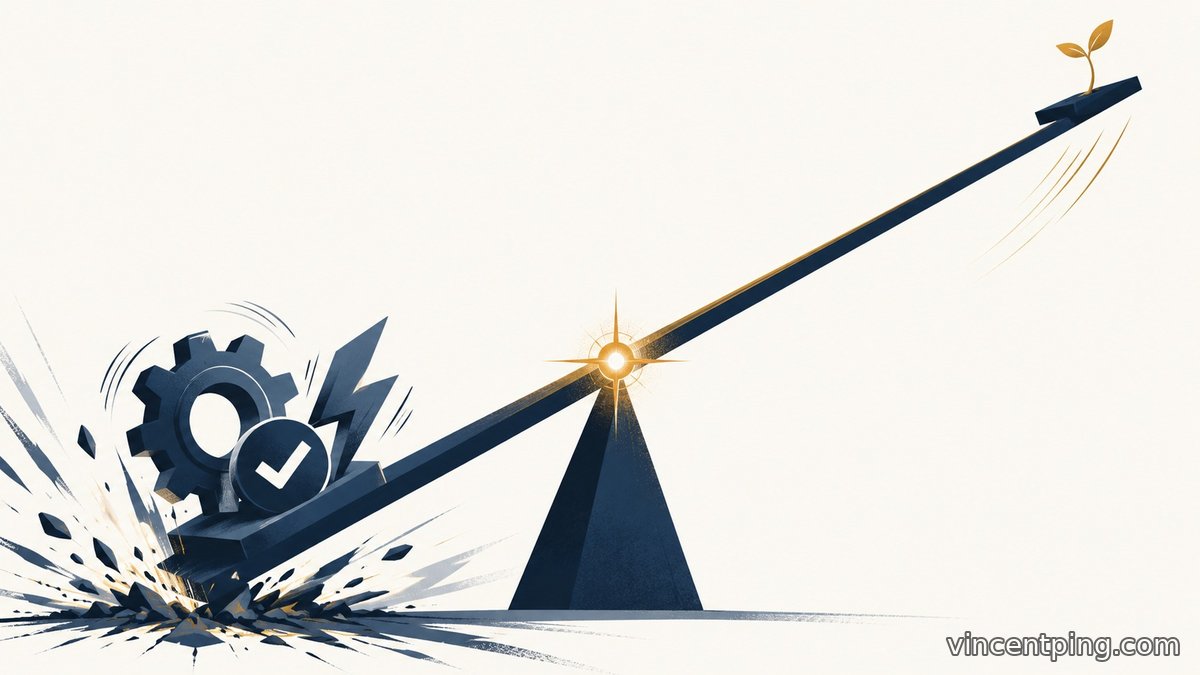
When we talk about what AI can do today, we usually ask how many tasks it can complete, how good the results are, and how often a human has to step in. Those are Agent questions, and they all come down to one:
Did the task succeed?
If we also want AI to help people grow, we have to ask something else:
Did the human improve?
The two goals often pull against each other.
Say you’re stuck choosing between two approaches to a tricky problem. An Agent should give you a recommendation so you can ship. A Tutor has to slow things down on purpose. It asks you to make the call first, asks what your call is based on, points out the conditions you may have missed, and keeps pushing back.
That’s the hard part. If a product is judged only on how fast and how well tasks get done, then letting people try first, asking them to explain their reasoning, and giving them a chance to redo the work all look like waste.
The better a system gets at doing things for people, the easier it becomes to optimize away the very practice that helps them grow.
So growing people can’t be a feature bolted onto an Agent product. It needs its own research questions. What kind of feedback actually helps? When should you offer a hint, and when should you let someone keep thinking? How do you tell “got it right this time” from “has really learned it”? And it needs its own product design, and its own ways of measuring success.
Put another way:
AI as Tutor needs to become a first-class direction of AI development now, standing alongside AI as Agent.
The Other Half
The skills people need may change. Growth may no longer follow the old career ladder. But understanding, experience, and judgment still take time, and they still come from going through things yourself.
We used to grow the people who do the work while the work got done. Now Agents are redesigning how work gets done. We should think just as seriously about how people grow, and that’s the job of a Tutor.
One half of the AI revolution is AI helping us get things done. The other half should be AI helping us grow.
Subscribe by email
Get new posts delivered straight to your inbox.
Your email is only used for new-post notifications. Unsubscribe anytime.