There were once more than thirty thousand bodies buried in Lincoln Park.
This is not a metaphor. Before the 1850s, this stretch of lakefront green was Chicago's municipal cemetery. The city expanded. The government decided to move the dead and return the land to the living. Most of the remains were relocated — but no one could guarantee the job was finished. The lawn where joggers run today, where families spread their blankets, where children chase squirrels — beneath it, some nineteenth-century Chicagoans may still be sleeping. Names unknown. The removal orders never found them.
Lincoln was assassinated in 1865, and the park was renamed in his honor. Death and commemoration. This place never pretended that life was light.
I came today specifically to see the Grant statue. I'd been cooped up for days wrestling with Claude Code — when it's cooperative, it makes you want to write code forever; when it isn't, it's a wall you can't get through. After enough of that, the need to go look at a statue starts to feel perfectly reasonable.
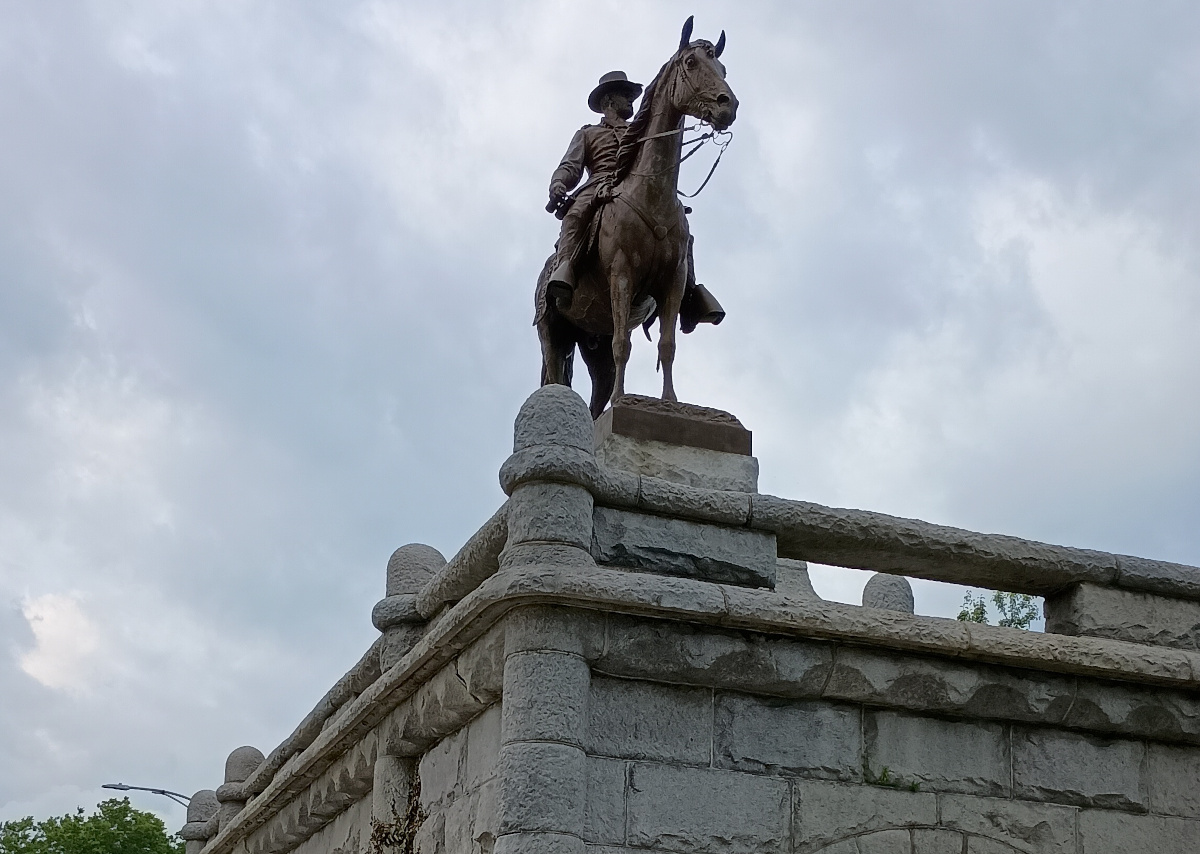
General Ulysses Grant — who would become president — died in July 1885. In his final months he raced his throat cancer, driving himself to finish his memoirs, hoping to leave his wife some royalty money. Mark Twain published them, and the contract became one of the most lucrative in American publishing history. Grant didn't live to see the check. Four days after he died, New York held his funeral. A million people lined the streets.
Chicago decided to build him a monument. Within a month of the announcement, tens of thousands of dollars had come in from every corner of the city, from nearly one hundred thousand donors. When the statue was unveiled in 1891, roughly two hundred thousand people were there. Chicago's total population was just over a million. One in five.
I stood in front of the statue and looked up at how Grant sat his horse. No triumphant gesture. No arm sweeping toward the horizon. The horse's front hooves stayed on the ground. He simply sat there, expression composed, like a man who had nothing left to prove.
The year after the statue was completed — 1892 — lightning struck. It hit near the arch at the base. Three people sheltering there were killed instantly. The bronze was untouched.
I don't know what to do with that detail. But it stays with me.
There is another structure in the park worth mentioning, though most visitors walk past it without a second glance. The Carlson Cottage, built in 1888, was originally a public restroom — segregated by sex, brick and stone, designed by the architect Joseph Lyman Silsbee. Silsbee's office once employed a young apprentice named Frank Lloyd Wright, who went on to become one of the most consequential architects of the twentieth century.
A public toilet. From the office that shaped a century of building.
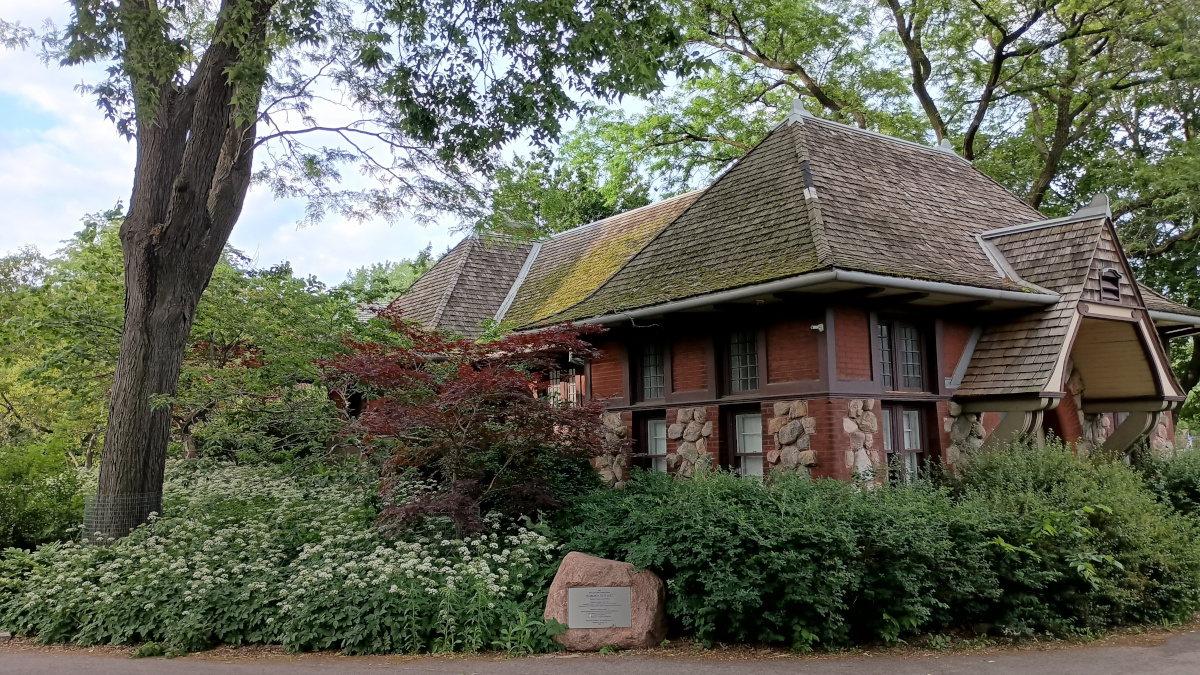
In 2008, the federal government funded the cottage's restoration through the Save America's Treasures program. Bureaucracies occasionally do surprising things — they decided to restore an 1888 outhouse because it was history. That logic, I accept.
But once restored, it was no longer used as a restroom. It became an event space, and most days it sits quietly locked. The history was preserved; the function died. It's a strange outcome — like maintaining a body in perfect condition after removing everything it was ever for.
In 2020, Mayor Lori Lightfoot, amid a nationwide reckoning with public monuments, formed the Chicago Monuments Project. The proximate cause was the Columbus statue — toppled by protesters, or quietly removed by the city before protesters could topple it, depending on which account you read. The committee's mandate was to review the city's monuments and public art: what should stay, what should go, whose stories had been left out of the official memory.
There is nothing inherently wrong with this. A city periodically examining what it has chosen to memorialize is ordinary civic practice. Public monuments are not neutral. Each one is a decision, made by a particular group of people in a particular era, telling everyone who passes: this person, this event, deserves to be remembered.
Grant's statue was on the review list.
The argument against him: he had signed policies that were unjust to Native Americans, and the westward expansion of his presidency brought forced removal and cultural destruction to tribal nations. These are facts.
But Grant was also the Union general who defeated the Confederacy — the man whose military pressure compelled Lee's surrender at Appomattox, the moment slavery's military defense collapsed. During Reconstruction, he was among the rare presidents who genuinely tried to protect the civil rights of Black Americans, deploying federal force against the Ku Klux Klan. The memoirs he finished while racing toward death were later called by Hemingway the best account of war he had ever read.
One person can be both of these things at once: an instrument of one justice, and an agent of another injustice.
I have no objection to the Monuments Project's existence. Scrutinizing history is not the same as erasing it. But I've always had a fundamental skepticism toward the logic that removing a bronze statue can repair a historical wound.
The thirty thousand bodies once buried under Lincoln Park did not change their position when the park changed its name. Removing a monument does not remove history. Sometimes it only creates a feeling of cleanliness — the problem seems handled, when really it has simply moved out of sight.
The Grant statue was ultimately not removed. The report recommended keeping it, with an interpretive panel added to provide fuller historical context. That strikes me as the most honest solution available — not because it satisfies everyone, but because it acknowledges that historical complexity cannot be resolved by a piece of bronze, or by taking a piece of bronze away. For what it's worth, I walked around the base of that arch today, all the way around, and found no interpretive panel. Perhaps it's still being made.
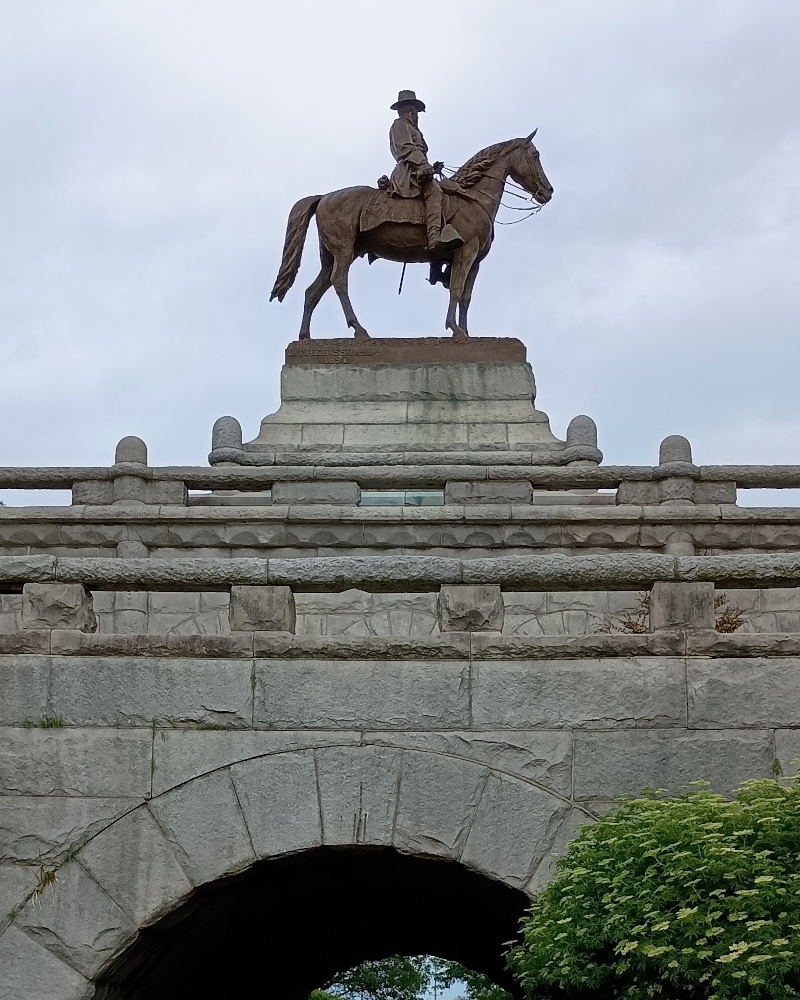
I sat near the statue for a long time. Wind off Lake Michigan. A man walking his dog. Kids on bikes. In the distance, by the smaller pond, someone was getting married.
Grant sat on his horse, Lake Michigan to his left, facing the city to the south. Some say the orientation is deliberate — the general keeping watch over the former Confederacy, a symbol of union and victory. But the expression I described earlier as composed — I want to change that word now. It's the tiredness of someone who has seen too much. Not a defeated tiredness. The kind that no longer needs to explain itself to anyone.
The lightning of 1892 killed three people. It didn't touch him.
I don't know what that means. But when something a city built in one month with money from a hundred thousand people is still standing a hundred and thirty years later — I'm willing to sit beside it a while longer.
There may still be some nineteenth-century Chicagoans underfoot who were never moved. That seems fine.
The dead and the bronze are more patient than we tend to think.